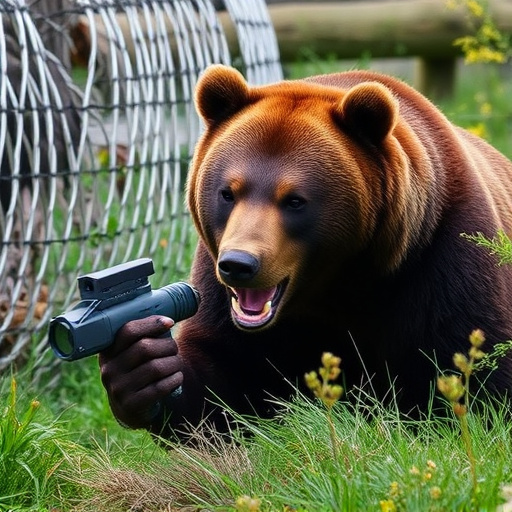
Bears rarely attack humans, but understanding triggers like food and territory is key for hikers in bear-inhabited areas. Bear spray, a popular deterrent, uses capsaicin to deter bears with success rates from 70% to 95%, depending on distance, wind, and bear behavior. Research recommends a 20-30 foot (6-9 meter) range for optimal use. While effective, bear spray should be part of a multi-layered safety strategy including noise-making, proper food storage, and knowledge of local bear behavior to ensure comprehensive bear safety.
In many outdoor adventure hotspots, aggressive bear encounters pose a significant risk. Understanding bear behavior is crucial for safety. This article delves into effective strategies against aggressive bears, focusing on bear spray as a popular defense mechanism. We explore what it is, how it works, its scientific effectiveness, and real-world applications. Additionally, we uncover other bear safety measures beyond spray, backed by research insights. Armed with this knowledge, folks can navigate bear country more confidently.
- Understanding Bear Behavior and Their Aggression
- Bear Spray: A Popular Defense Mechanism – What Is It and How Does It Work?
- Effectiveness of Bear Spray: Scientific Insights and Real-World Applications
- Additional Measures for Bear Safety Beyond Bear Spray
Understanding Bear Behavior and Their Aggression
Bears, especially grizzly bears and black bears, are powerful animals with a reputation for aggression, but understanding their behavior is crucial to preventing conflicts. Research suggests that bear attacks are relatively rare, and most bears prefer to avoid humans. However, certain situations can trigger aggressive responses in these wild animals. One key factor is food sources; bears may become accustomed to human food or trash, leading them to associate humans with a potential meal. Additionally, protecting cubs or defending their territory can incite aggression.
Bear spray, a popular deterrent, has been widely researched. Scientific studies indicate that bear spray can be highly effective when used correctly. It creates an irritating barrier, allowing individuals to retreat and avoid direct contact. However, the effectiveness depends on various factors, including the user’s proximity to the bear, wind direction, and the bear’s individual temperament. Understanding these aspects is essential for hikers and outdoor enthusiasts navigating bear-inhabited areas.
Bear Spray: A Popular Defense Mechanism – What Is It and How Does It Work?
Bear spray, also known as bear repellent, has become a popular defense mechanism for outdoor enthusiasts and hikers in areas inhabited by aggressive bears. It’s a convenient, portable, and widely available tool designed to deter bears from approaching humans. This aerosol product contains capsaicin, the active ingredient found in chili peppers, which irritates the bear’s eyes, nose, and respiratory system. When sprayed directly towards an approaching bear, it can cause the animal to retreat, providing valuable time for escape or safety measures.
Research on bear spray effectiveness is varied. Studies show that when used correctly, bear spray can be highly effective in deterring black bears and grizzly bears from attacking. Success rates range from 70% to 95%, depending on factors like distance, wind direction, and the bear’s behavior. However, it’s crucial to remember that no single method guarantees complete protection against aggressive bears. Bear spray is most effective as part of a comprehensive safety strategy, including making noise while hiking, traveling in groups, securing food properly, and knowing how to respond if a bear encounter occurs.
Effectiveness of Bear Spray: Scientific Insights and Real-World Applications
Bear spray, also known as bear repellent, has been a popular choice for outdoor enthusiasts and hikers navigating areas inhabited by bears. Scientific research into its effectiveness has yielded interesting insights. Studies show that when used correctly, bear spray can be highly effective in deterring aggressive behavior from black bears and grizzly bears (brown bears). The active ingredients in bear spray, such as capsaicin, can create a burning sensation in the eyes and respiratory system of the bear, temporarily disorienting it and allowing the person to escape.
Real-world applications reinforce these scientific findings. Numerous incidents report successful use of bear spray as a last-resort defense against attacking bears. However, effectiveness also depends on factors like distance, weather conditions, and the bear’s temperament. Research suggests that a range of 20-30 feet (6-9 meters) is optimal for spraying, ensuring the bear receives a potent dose without the risk of wind blowing it away. In challenging conditions like heavy rain or fog, bear spray may not work as intended, emphasizing the need for proper usage and awareness of environmental factors.
Additional Measures for Bear Safety Beyond Bear Spray
Beyond bear spray, there are several additional measures that significantly enhance bear safety in outdoor settings. Understanding how effective bear spray truly is, based on recent research, reveals its limitations—while not ineffective, it’s not always a foolproof solution. Studies show that bear spray has varying success rates depending on factors like wind direction and distance to the bear. Therefore, complementing it with other precautions becomes crucial.
One key measure is making noise while hiking or camping in bear country. Loud voices, singing, or clapping can deter bears from approaching unexpectedly. Another effective strategy is securing food properly; store food in airtight containers elevated at least 15 feet (4.6 meters) off the ground and away from your campsite to minimize attractants. Additionally, knowing local bear behavior and staying alert during outdoor activities helps prevent dangerous encounters, underscoring that a multi-layered approach is vital for bear safety.
In understanding bear behavior and aggression, it’s clear that a multi-layered approach to safety is essential. While bear spray has emerged as a popular defense mechanism, research on its effectiveness varies, highlighting the need for context-specific use. Beyond bear spray, additional measures such as making noise, traveling in groups, and properly storing food can significantly enhance bear safety. By combining these strategies, outdoor enthusiasts can navigate bear country with greater confidence and minimal risk. Remember, awareness, preparation, and respect for bears are key to ensuring a safe and enjoyable experience in their shared environment.